
HOW WINDOWS CAN DELAY OR SPEED UP YOUR PROJECT
For a developer, the "Dry-In" date is one of the most significant milestones on the calendar. This is the moment the building becomes weather-tight, allowing sensitive interior work to commence. According to Construction Dive, supply chain volatility and logistical bottlenecks remain the leading causes of schedule overruns in the current market.
At the center of this "Dry-In" phase is the window system. If the windows are late, the project stalls. If they arrive out of sequence, labor costs skyrocket.

Vetrina Windows designed, manufactured, and delivered thousands of window units for the One Thousand One
The Hidden Role of Window Coordination
Successful project managers know that window procurement is not a "set it and forget it" task. It requires deep coordination between the manufacturer, the glazier, and the general contractor.
1. Lead Time Management and "The Gap"
The most common friction point in construction is the gap between the final field measurements and the manufacturing lead time. Custom window systems, such as those provided by Vetrina Windows, require precision.
· The Risk: Ordering based on architectural drawings rather than "as-built" openings can lead to units that don't fit.
· The Solution: Early engagement with the manufacturer allows for "rough-opening" coordination, ensuring that the structural openings are built to the window specifications, rather than the other way around.
2. Logistics and Site Staging
Large-format glass systems are heavy, fragile, and require specialized equipment for offloading. As noted by For Construction Pros, site congestion is a major productivity killer.
· Phased Delivery: Coordinating "just-in-time" deliveries ensures that windows arrive exactly when the floor is ready for installation, reducing the risk of on-site breakage and freeing up valuable staging space.
· Crating and Labeling: Systems that arrive pre-labeled by floor and unit number allow labor teams to move directly to installation without sorting through inventory.
3. Structural Integration and Weather-Tightness
Modern window systems are integrated into the building’s building envelope. Coordination with the waterproofing and siding trades is essential. A failure in the flashing or the interface between the window frame and the air barrier can lead to leaks that aren't discovered until the building is finished – resulting in catastrophic "re-work" that can double the original timeline.
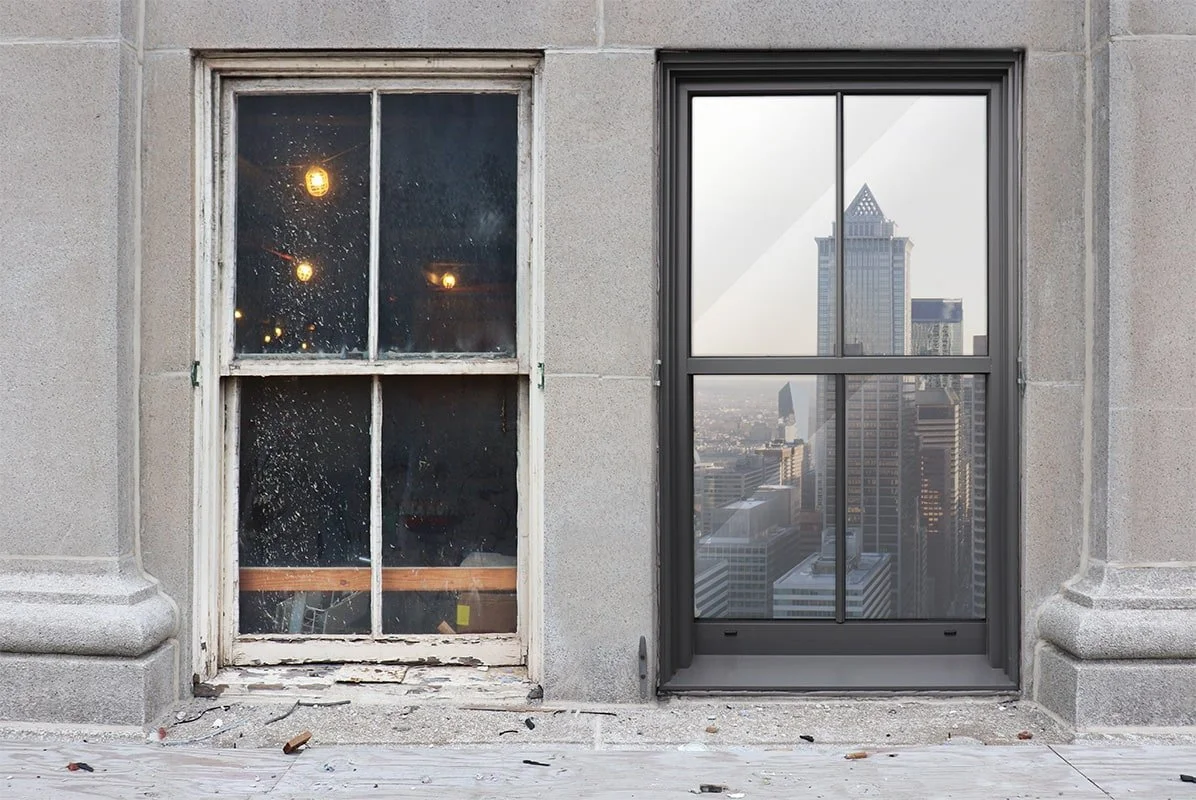
Vetrina Windows created aluminum replicas of 100-year-old wooden windows for a renovation of a historic building of The Atlantic luxury apartments in Philadelphia
Why Supplier Reliability is a Competitive Advantage
In a tight labor market, your subcontractors' efficiency depends on the reliability of the materials. When a window supplier delivers a complete, defect-free package on schedule, it creates a "domino effect" of productivity:
· Dry-In Acceleration: Getting the glass in early means the HVAC, electrical, and finishing trades can work in a climate-controlled environment, which often speeds up their individual production rates.
· Reduced Carrying Costs: Every week shaved off the construction timeline reduces the interest on construction loans and speeds up the transition to the leasing or sales phase.
· Lower Labor Risk: Predictable schedules allow contractors to keep their best crews on-site rather than moving them to other projects during "waiting periods."
Windows should never be treated as a simple commodity. They are a complex logistical component that sits at the heart of your project's success. By prioritizing coordination, choosing manufacturers with transparent lead times, and understanding the structural requirements of modern glass, developers can turn a potential bottleneck into a streamlined advantage.
A more detailed quote request form can be found here.