
Common Bi-Fold Door Problems & Troubleshooting
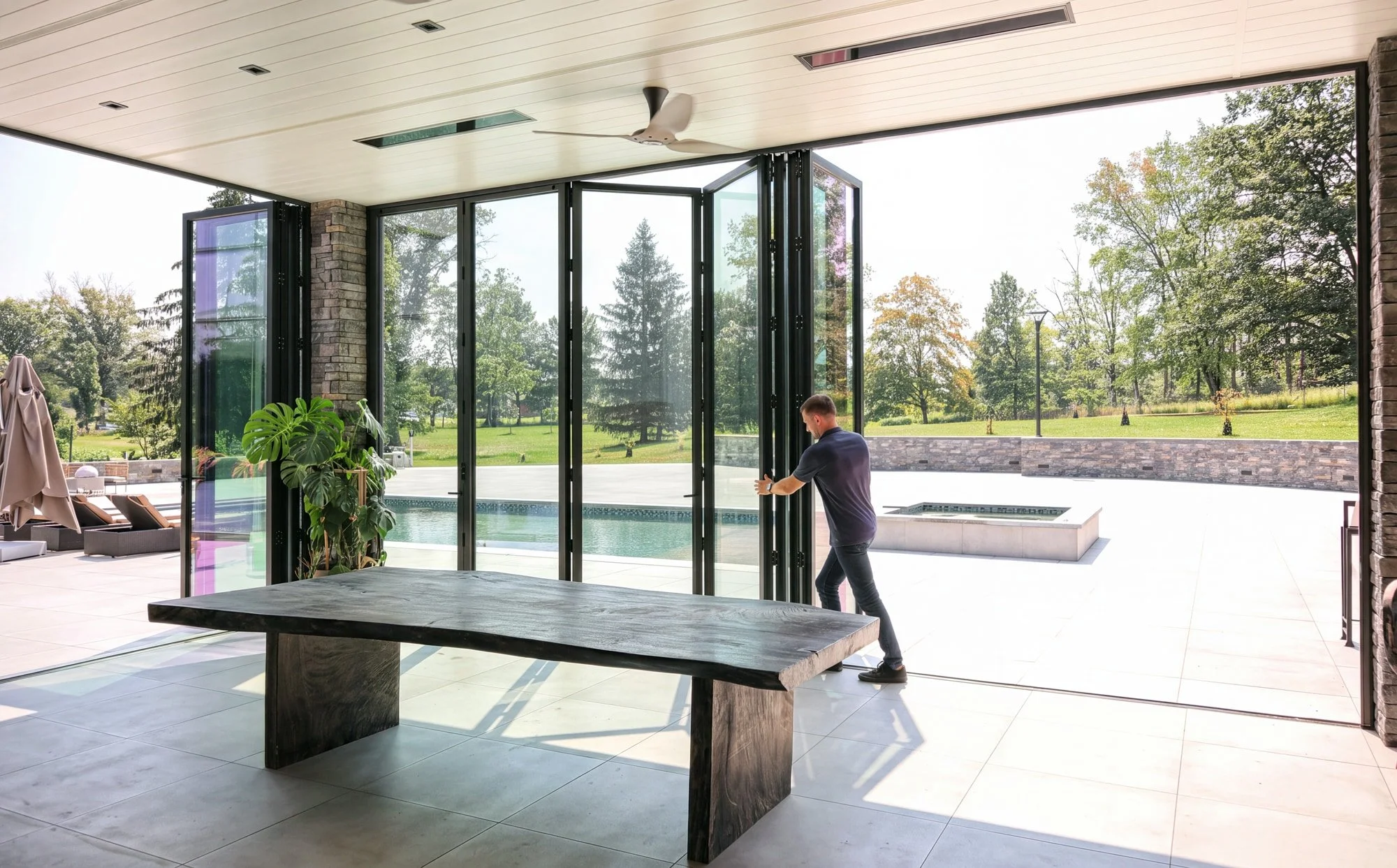
Applies to: Bi-Fold and Bi-Fold Plus folding door systems.
Vetrina’s Bi-Fold and Bi-Fold Plus door systems use multiple connected panels, hinges, guides, rollers, locking points, and, depending on the configuration, a swing access door. When all components are aligned and maintained correctly, the panels should fold, slide, close, and lock smoothly.
If operation becomes difficult, do not immediately assume that a roller, hinge, or lock has failed. Many common symptoms can be caused by debris in the track, an incorrect opening or closing sequence, panel misalignment, excessive structural movement, or deferred maintenance.
This guide covers the most common checks to make before requesting service.
Do Not Force the Door
If a panel suddenly becomes difficult to move, a handle will not turn normally, or a shoot bolt will not engage, stop before applying excessive force.
Bi-fold panels can be large and heavy, and forcing one panel can transfer unnecessary loads into hinges, guides, rollers, locks, or neighboring panels. The frame must remain accurately level and plumb, and the surrounding building structure must not transfer loads into the door system. Proper alignment is necessary for smooth panel movement.
Start by identifying where the resistance occurs and whether it affects one panel, one pair of panels, or the complete system.
First, Make Sure the Door Is Being Operated in the Correct Sequence
A surprisingly common operating problem is trying to move a panel before releasing its locking hardware.
Vetrina instructs users to operate the panels in the correct sequence and recommends keeping tracks, running channels, and drainage openings free of debris, and maintaining the rollers, hinges, and other moving hardware.
Bi-Fold Without a Swing Door
To open the system, unlock the shoot-bolt locks where applicable, rotate the intermediate handles 90° to release the shoot bolts, and then move the folding panel pairs toward their stacking side.
To close it, bring each folding pair back into alignment with the frame and then engage the shoot-bolt locks. Use the D-handle above the intermediate handle to pull the panels tightly together while operating the shoot-bolt lock.
If the handle or shoot bolt feels unusually difficult, do not force it. First, check that the panels are completely aligned.
If Your Bi-Fold Has a Swing Door
The operating sequence is slightly different when the system includes a swing access door.
When opening, open the swing door first and connect it to the panel catch on the adjacent panel. Then release the folding-panel locking points and fold the panels away, starting with the pair nearest the swing door.
When closing, return and secure the folding panels first. Close the swing door last, after the other panels have been locked into the frame.
Closing the swing door too early can interfere with the folding panels' correct positioning.
The Door Is Hard to Slide or Fold
Start with the simplest possible cause: the track.
Inspect the entire bottom track and running channels for:
Dirt
Small stones
Construction debris
Leaves
Sand
Hardened residue
Objects caught around the rollers
The maintenance documentation specifically recommends keeping both the top and bottom tracks clean and free of debris. It also recommends cleaning around gaskets, hinges, locks, and other moving mechanisms and periodically lubricating appropriate moving components.
Vacuum the track rather than pushing debris farther into the channel. After cleaning, operate the door slowly again.
If Cleaning Does Not Fix It
Observe whether the resistance happens:
Throughout the entire travel: This can indicate alignment, track, guide, or structural issues.
At only one location: Inspect that portion of the track and the corresponding roller or guide.
Only when the panels begin folding: Look more closely at panel alignment and hinges.
Only when approaching the closed position: Check whether the panels are properly aligned with one another and the locking points.
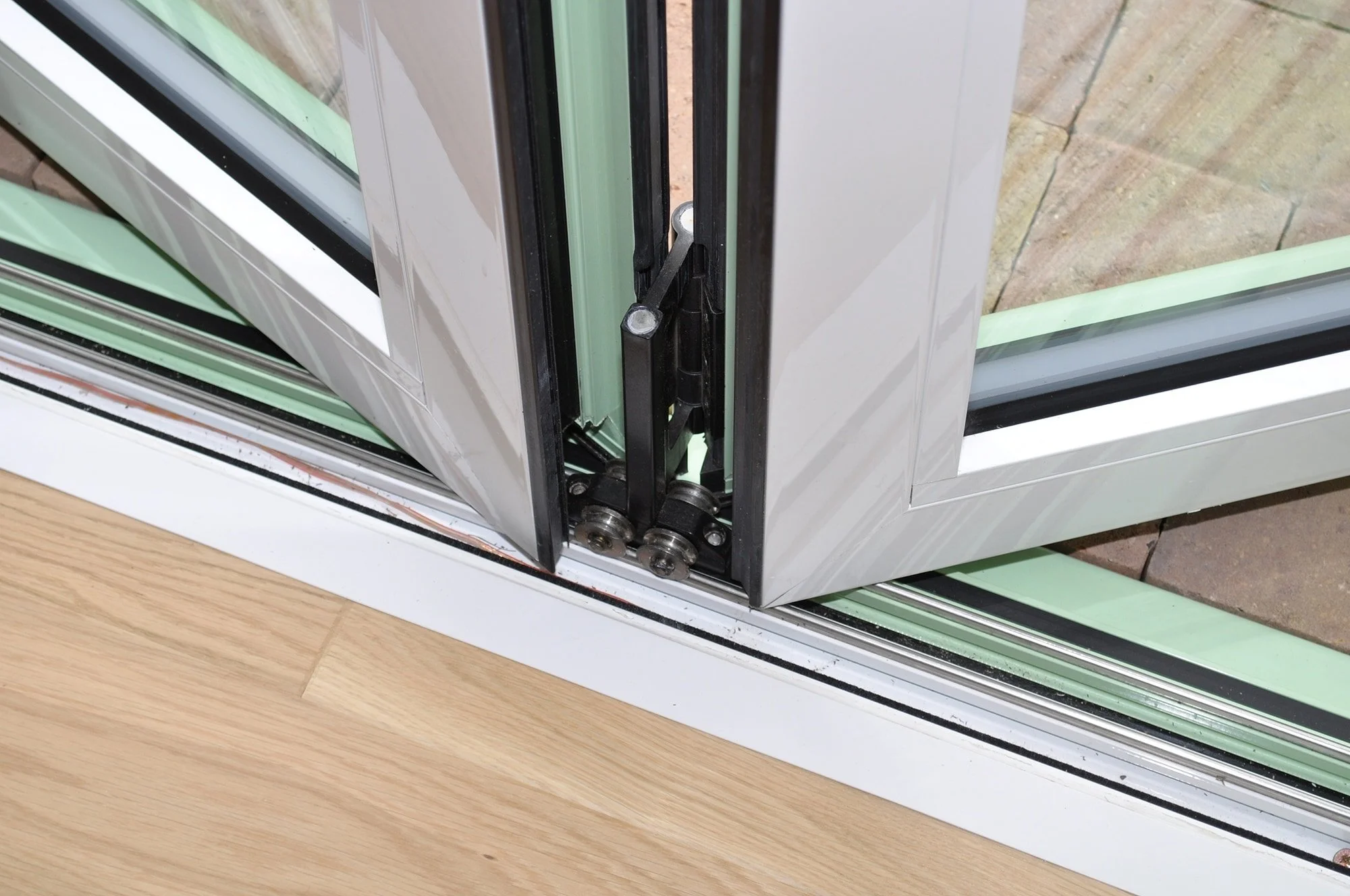
Accurate positioning of each panel's bottom rollers and top guides is required for correct operation
If a roller or guide appears visibly displaced or damaged, stop operating the door and contact Vetrina rather than attempting to remove the panel.
The Panels Do Not Line Up When Closed
When the complete system is closed, the panel gaps should appear generally uniform and parallel.
If one panel sits noticeably higher or lower than another, or a gap becomes wider toward the top or bottom, the system may have an alignment issue.
Several conditions can contribute to this:
Frame geometry. The outer frame may no longer be completely level, plumb, or square.
Top-track distortion. The installation guide requires the top track to maintain consistent internal dimensions without bowing in either direction and specifically warns that the building must not transmit loads into the frame.
Roller or guide position. The bottom rollers and top guides must remain correctly positioned.
Panel geometry. The glazing inside each panel also helps keep the sash square.
The final installation procedure specifically calls for completing the toe-and-heeling process so that all door gaps are equal and parallel.
A small hardware adjustment may correct minor alignment, but repeatedly adjusting the hardware is not an appropriate solution if the outer frame or panel geometry has changed.
One Panel Appears to Be Sagging
The glass in a bi-fold panel doesn't simply sit inside the sash. Its support blocks are part of the panel's structural alignment.
Vetrina specifies toe-and-heel glazing packers, including load-carrying packers that keep panels square and level, and supporting packers that prevent movement and provide rigidity.
If one panel begins to sag, common signs can include:
An uneven gap between adjacent panels
The lower corner rubbing or dragging
Shoot bolts no longer aligning correctly
Increased effort near the closed position
Hinges appearing correctly positioned while the panel itself appears out of square
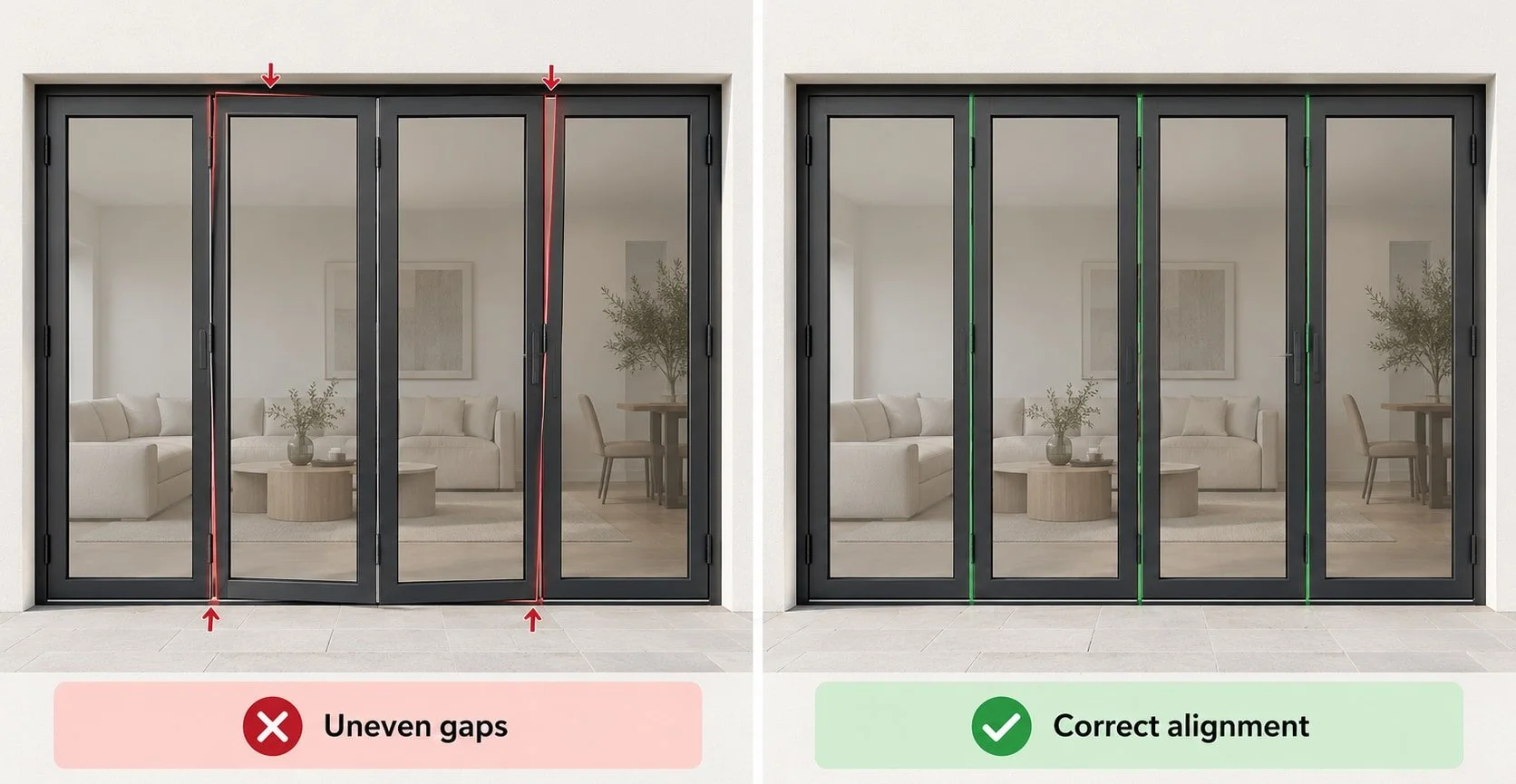
If the condition developed gradually or returns after adjustment, a qualified technician may need to inspect the glazing support and overall panel geometry.
The Shoot-Bolt Lock Will Not Engage
Do not immediately assume the shoot-bolt mechanism is broken.
First bring the panels fully into their closed position and verify that the panel gaps are properly aligned.
Use the D-handle where provided to pull the folding panels tightly into position while engaging the shoot-bolt handle.
Also inspect the locking area for debris, and confirm the mechanism is clean and properly lubricated.
If the handle still requires excessive force, stop. The issue may be panel alignment rather than the locking mechanism itself.
The Swing Door Closes but Will Not Lock
If your configuration includes a swing door with a multipoint lock, first confirm that all folding panels are fully closed and secured.
Close the swing door after the folding panels.
For a multipoint-lock swing door:
Close the swing door and confirm that it has latched.
Lift the lever handle upward to engage the locking hooks.
Lock the door by turning the key cylinder twice.
If the handle cannot be lifted normally, do not force it. Check that the door is completely seated in the frame and that the preceding folding panels are properly aligned.
Do Not Leave the Key in an Intermediate-Door Cylinder
If your door uses key-operated cylinders on intermediate panels, remove the key before folding or sliding the panels. A key left in the cylinder during operation can break or damage the profile finish as the panels fold together.
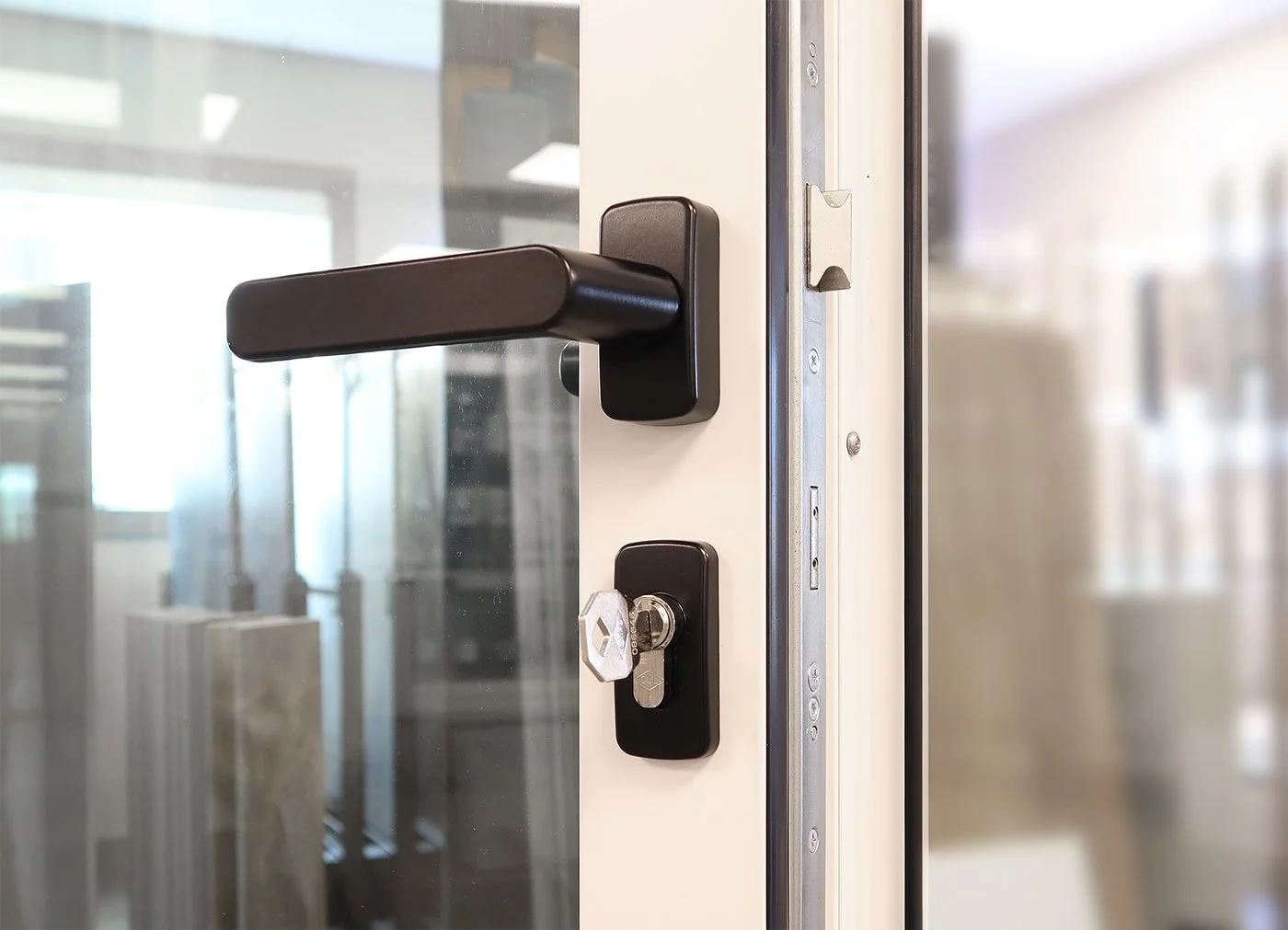
This is especially important on configurations where neighboring panels stack closely together
The Door Is Noisy or Feels Jerky
Noise, vibration, or uneven movement can sometimes result from dirt or dry moving components rather than a mechanical failure.
Inspect and clean:
Bottom track
Rollers
Hinges
Locking hardware
Running channels
Areas between panels and gaskets
Vetrina’s maintenance documentation recommends regular cleaning and lubrication of moving hardware. Hinges, handles, locks, and other moving mechanisms should be cleaned and lubricated every six months, while the stainless-steel track, bottom wheel sets, and hinges should be serviced annually, with more frequent maintenance where conditions require it.
High-traffic installations, coastal locations, and doors that have remained unused for long periods may need more frequent attention.
Water Is Appearing Around the Bottom Track
First inspect the designed drainage paths and make sure they are clear.
Do not intentionally seal or obstruct drainage openings to stop water from appearing in the track.
During assembly, the Bi-Fold installation procedure also requires sealant at the ends of the bottom profile so water does not drain into the frame cleats.
If drainage openings are clean but water repeatedly enters the interior, additional investigation may be required to determine whether the issue involves:
Threshold installation
Drainage
Frame joints
Perimeter sealing
Sub-sill conditions
Surrounding construction
Evaluate persistent leakage rather than repeatedly covering it with additional sealant.
The Door Worked Before but Has Gradually Become Difficult
This distinction can be useful.
If the bi-fold operated correctly after installation and gradually became harder to use, first investigate maintenance, debris, lubrication, fasteners, and minor alignment.
We recommend periodically checking for loose or missing screws and maintaining the tracks, rollers, hinges, and locking components.
If the door has been difficult from the beginning, or the problem appeared after surrounding construction, settlement, or structural work, installation geometry becomes more important.
The project-planning documentation requires the site to be level, plumb, and clear of debris before installation because these conditions directly affect door operation.
When to Stop Troubleshooting
Basic cleaning, lubrication, and operating-sequence checks are appropriate for owners. Someone familiar with the system should handle more significant alignment or hardware work.
Contact Vetrina if a roller or top guide appears damaged or displaced, a panel visibly sags or sits out of square, the frame or top track appears bowed, a shoot bolt cannot engage even when the panels are aligned, the multipoint lock will not operate normally, panels repeatedly fall out of alignment, glass or glazing beads appear displaced, or the door requires substantial force to operate.
Avoid removing panels, moving glazing packers, modifying rollers, drilling profiles, or making structural adjustments without confirming the correct procedure.
Need Help with Your Bi-Fold System?
If the problem continues, contact Vetrina Windows and provide:
Project or order information
Door configuration or shop-drawing position, if available
Whether the system opens inward or outward
Whether it includes a swing door
A photo showing the complete bi-fold system closed
Photos showing the affected panel, roller, hinge, lock, or track
A photo showing the panel gaps while closed
A short video showing the door being opened and closed
A description of exactly where resistance or misalignment occurs
A video showing the complete operating sequence is especially useful with bi-fold systems because it allows our team to see how the problem develops as the different panels move.