
How to Receive and Inspect Your Vetrina Delivery
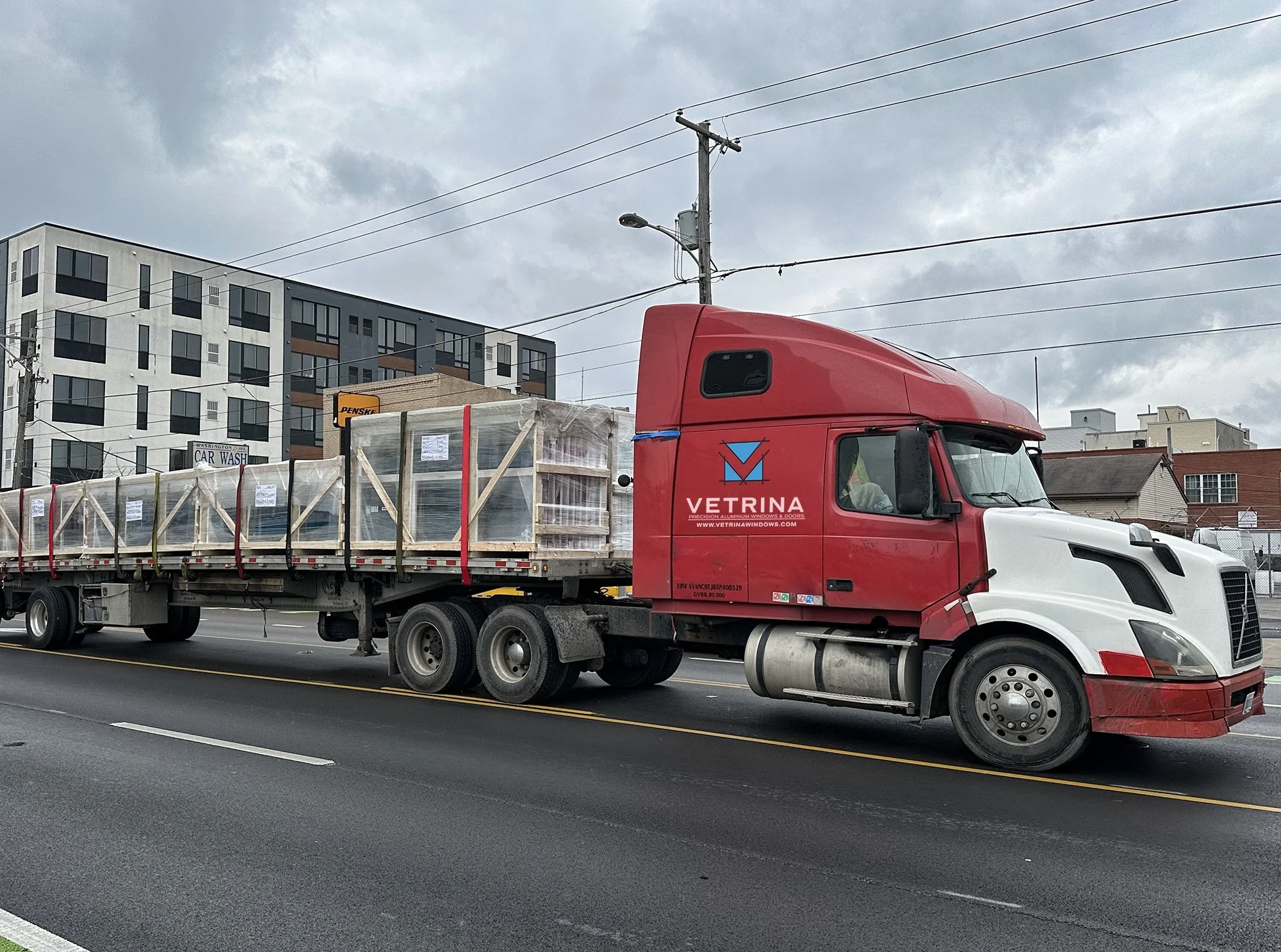
Vetrina windows and doors are custom-manufactured for each project, so inspect every shipment carefully when it arrives. Taking a few minutes to verify the shipment before the carrier leaves can help you catch shipping damage, shortages, or discrepancies right away and make it much easier for our team to help if something is wrong.
Compare the shipment with your packing list, approved order, and project documentation before accepting delivery.
Be Prepared Before the Delivery Arrives
Before delivery, make sure the jobsite is ready to receive and safely handle the shipment.
Windows and doors can be large, heavy, and difficult to control. Confirm that you have sufficient personnel and appropriate lifting equipment available for the size and weight of the units being delivered.
Depending on the project, this may include glass suction lifters, material-handling equipment, or other suitable lifting devices. Units should never be carried by an operable sash, hardware, mullion, or glazing bead.
You should also prepare a clean, protected storage area in case the products will not be installed immediately.
Inspect the Shipment Before the Carrier Leaves
Whenever possible, perform the initial inspection while the delivery driver is still on site.
Check the shipment against your packing list and approved project documentation. Look for anything that appears damaged, missing, or inconsistent with the order.
Do not rely only on the condition of the outside packaging. Damage can sometimes affect the frame, glass, hardware, or finish even when the packaging appears relatively intact.
Verify the Quantity and Unit Identification
Confirm that the number of units received matches the shipment documentation.
Check the unit numbers or position numbers against the approved order and shop drawings, including:
Unit or position number
Window or door type
Opening configuration
Handing or operating direction
Sash configuration
Verify each unit number, opening type, handing, and sash configuration against the approved order.
For large projects, this is especially important because units may look similar while having different dimensions, handing, hardware, or intended locations.
Check the Dimensions
At minimum, verify a representative unit from each delivery against the approved measurement or shop-drawing documentation.
If anything appears inconsistent, additional units should be measured before installation begins.
Remember that the fabrication size shown on the shop drawings is the manufactured unit size, while the rough opening is larger to provide the required installation clearance.
Inspect Frames and Finishes
Look carefully at the frame and sash surfaces.
Check for:
Dents or deformation
Scratches or gouges
Damaged corners
Open or separated joints
Bent profiles
Damaged protective film
Finish damage
Displaced or damaged gaskets
Pay particular attention to exposed corners and edges, which can be vulnerable during transportation. Inspect the protective film, frame and sash surfaces, corners, joints, gaskets, and finishes for visible damage.
Inspect the Glass
Check each accessible insulating glass unit for visible damage.
Look for:
Cracks
Chips
Edge damage
Broken panes
Internal condensation
Other visible indications that the insulating glass unit may have been damaged
Photograph glass damage clearly before moving or unpacking the shipment further.
Check Operation and Hardware
Where practical and safe, check accessible operable units before signing for the shipment.
Make sure:
Sashes open and close
Handles operate normally
Locks engage
Hinges appear intact
Sliding or operating hardware has not been visibly damaged
Operate accessible sashes through their intended opening positions and confirm the hardware functions correctly.
Do not force a unit that is not operating normally. A problem may be caused by shipping damage, temporary transport conditions, or misalignment and should be evaluated before further operation.
Verify Accessories and Loose Components
Some components may be packaged separately from the main units.
Confirm that required accessories are present and identifiable, which may include:
Sills
Trim pieces
Brackets
Anchors
Gaskets
Hardware
Fasteners
Handles
Other project-specific components
The exact items supplied vary by project, so compare the delivery with your approved order and packing documentation.
If You Find Damage or a Shortage
If you discover visible damage, missing items, or another discrepancy:
Do not simply sign the delivery receipt without noting it.
Record the condition on the carrier's delivery receipt before signing, and take clear photographs showing:
The damaged product or missing-item condition
The surrounding packaging
The unit or identifying label where available
The delivery receipt showing the damage notation
Vetrina requires visible damage, shortages, and discrepancies to be documented on the delivery receipt and photographed before you accept the shipment.
Report Shipping Damage Within 48 Hours
Report damage, shortages, or discrepancies to Vetrina Windows within 48 hours of delivery, along with clear photographic documentation.
Providing complete information from the beginning helps us identify the affected unit and determine the appropriate next step.
When contacting us, include:
Project name or order information
Unit or position number
Description of the issue
Photos of the affected product
Photos of the packaging
Photo of the delivery receipt
Any other relevant shipment documentation
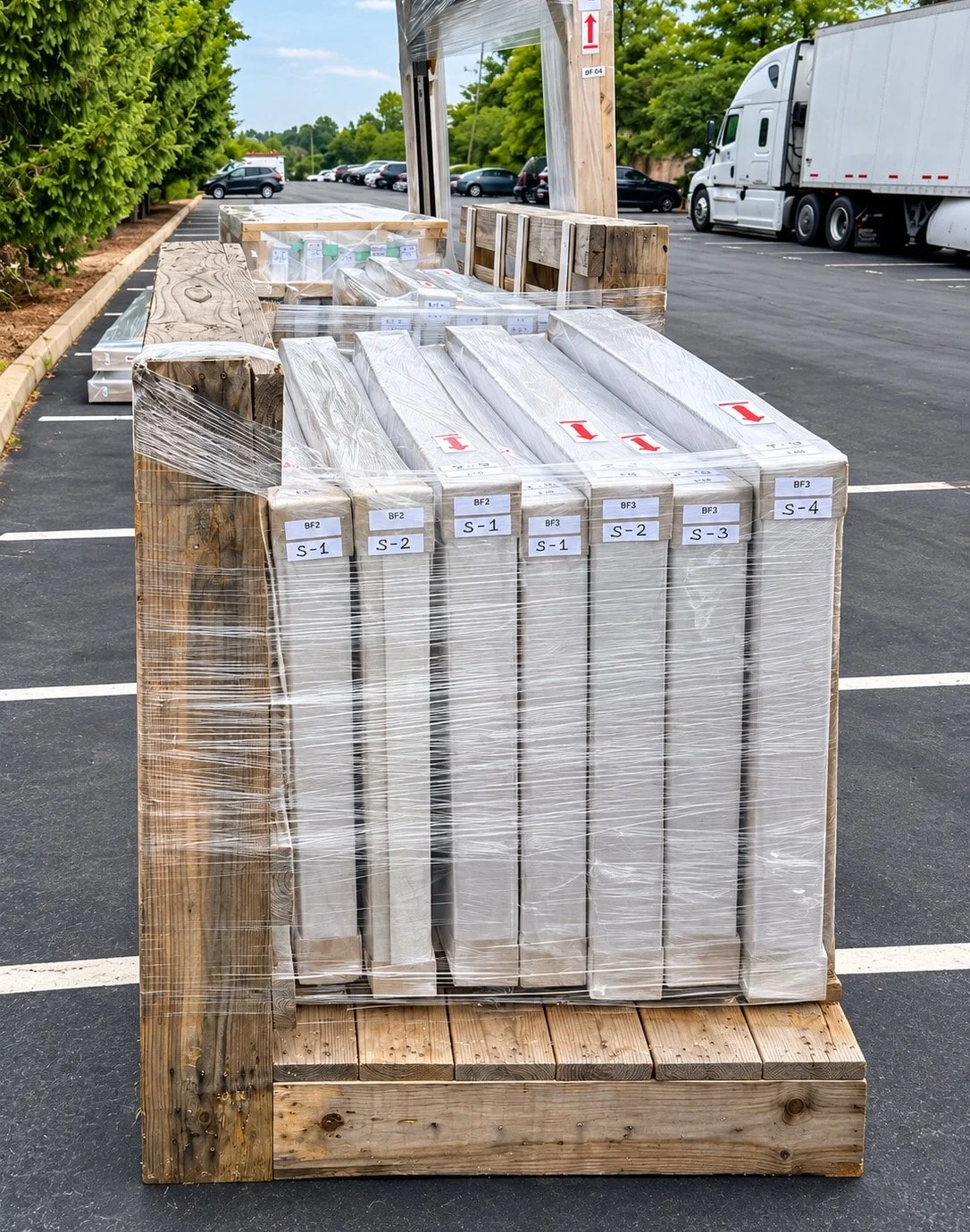
A crated delivery of windows for one of our projects
Do Not Install a Damaged Unit
If a unit has visible damage, do not install it unless Vetrina has authorized you to proceed.
Installing a damaged product can make it more difficult to determine whether an issue occurred during shipment or installation and can complicate corrective work.
How to Store the Products After Delivery
If you won't install the windows or doors immediately, store them carefully.
Units should generally be:
Stored upright
Supported on stable, padded supports
Kept at least 3" above the ground
Kept as close to vertical as practical
Protected from moisture and construction debris
Stored in a clean, dry, ventilated location
Protected from direct sunlight and excessive heat
Separated with clean, nonabrasive spacers
Do not stack materials against the frames or place loads on the sashes, mullions, glazing, or hardware. Proper storage is especially important for products that will remain on site for an extended period before installation.
Protect the Products Until Installation
Construction sites can expose finished windows and doors to dust, debris, moisture, impact, welding, masonry work, paint, and other hazards.
Keep the products protected and avoid removing factory protection earlier than necessary. At the same time, protective film should not remain exposed to prolonged sunlight or heat indefinitely. Vetrina recommends removing protective film within six weeks after installation, or sooner where required by the applicable finish or profile manufacturer.
A Simple Delivery Checklist
Before the driver leaves, confirm that you have:
Counted the units
Checked unit identification
Compared the shipment to the approved order
Inspected frames and finishes
Inspected glass
Checked accessible hardware and operation
Confirmed accessories
Photographed any damage
Wrote any damage or shortage on the delivery receipt
Kept a copy of the signed delivery documentation
If everything looks correct, you can safely move the products to the prepared storage or installation area.
Need Help With Your Delivery?
If you find damage, missing components, or a discrepancy with your shipment, contact Vetrina Windows as soon as possible.
Please send your project or order information, the affected unit number, clear photographs, and a copy or photograph of the delivery receipt so our team can review the issue quickly.